Most brands do not have a voice problem. They have a consistency problem. The website sounds different from the emails, which sound different from the social posts, which sound different from the pitch deck. The result is a brand that feels assembled rather than designed. Prospects notice this even when they cannot articulate it, and it creates friction at the point where trust is being built.
Brand voice work starts with positioning. Before we can decide how you should sound, we need to establish who you are to whom and why that matters to them. This means working through your market positioning, competitive landscape, and target audience. The voice that emerges from this work is not arbitrary or cosmetic. It reflects what you are actually saying, said in a way that resonates with the people you need to reach.
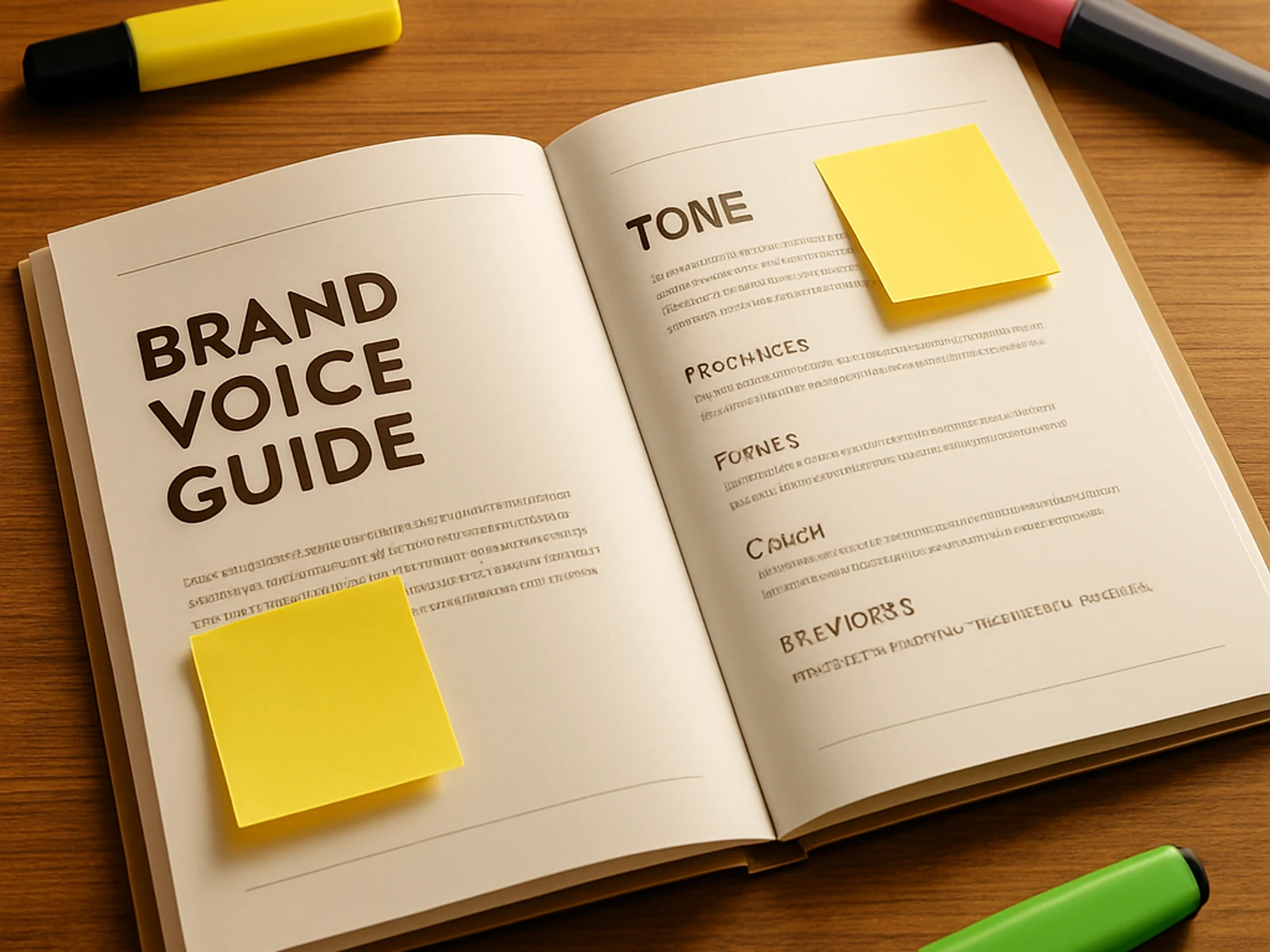
The brand voice guide that comes out of this process covers everything needed for consistent application: how you address your audience, what words and phrases belong to your brand, what to avoid, how to handle technical content, how to write in different contexts (formal vs informal, long vs short form), and examples of the voice applied across common content types.
For teams, the guide is the brief that every writer uses going forward. For solo operators, it is the quality check. For agencies and freelancers creating content on behalf of a brand, it is the difference between content that sounds consistent and content that sounds like different people wrote it on different days.
In practice
Questions about this service